
Data Watchdog
When a value crosses its limit, the right person knows within minutes, and someone takes charge.
The problem it solves
An alarm nobody sees is not an alarm.
Critical values are watched in the control room, but at night or on a remote site an alarm can wait for hours.
When someone is finally called, nobody knows whether someone else already took charge.
What it does
-
Surveillance and alarm limits
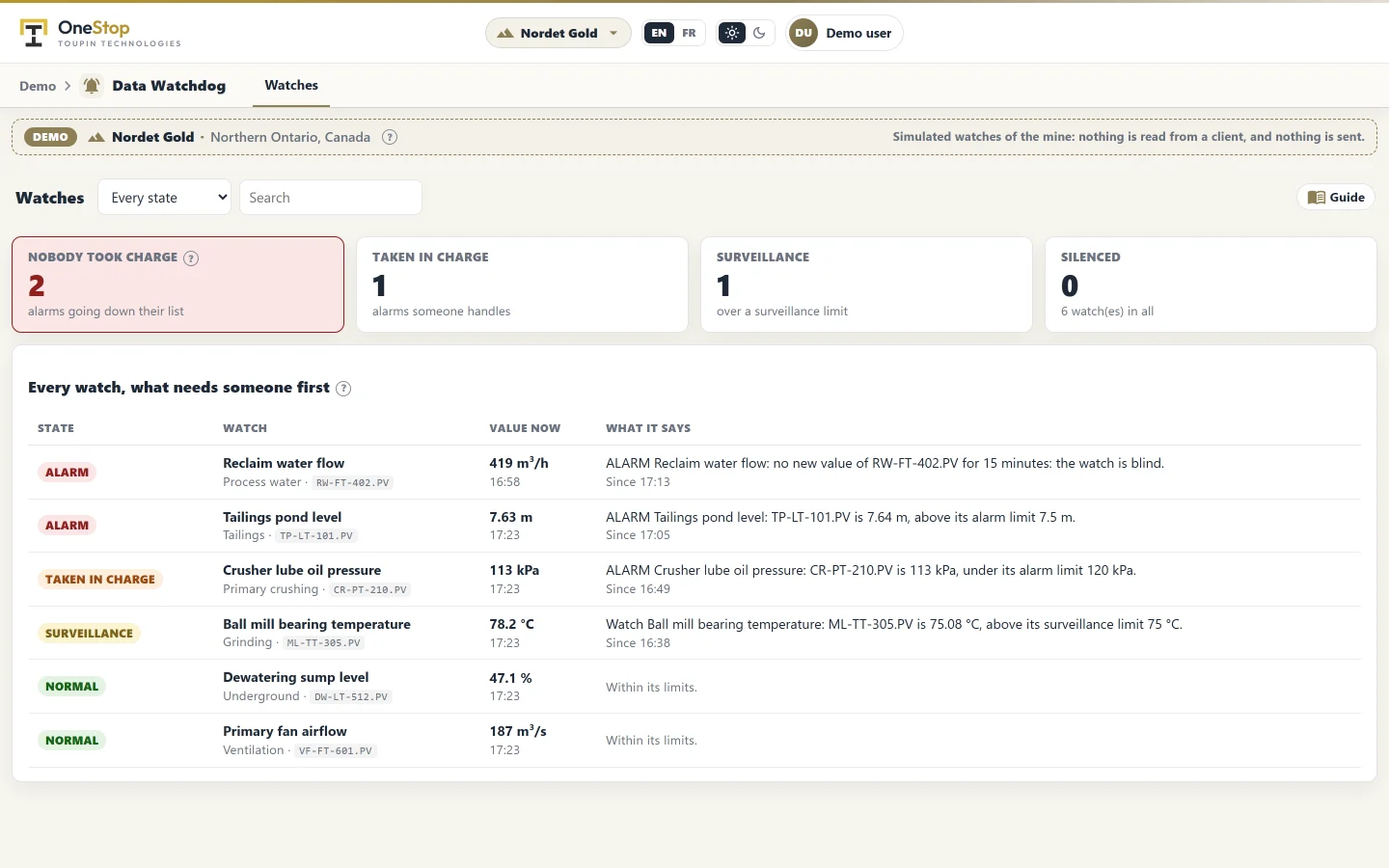
High and low limits with a dead band and delays, no new value, a frozen value or a change too fast, each with its own message.
-
Email, text and call
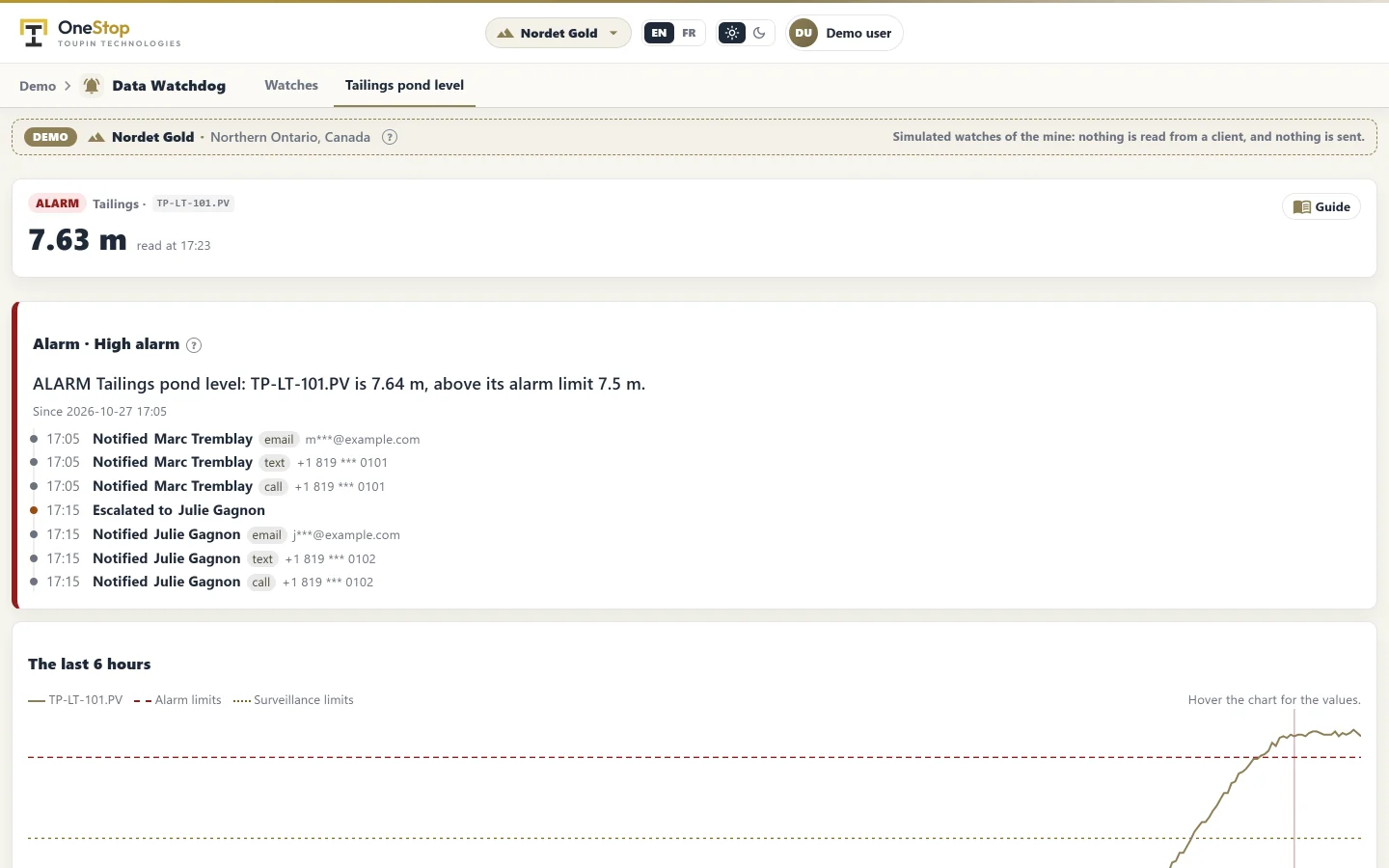
An alarm emails and texts the first person of the list, and calls them. They take charge with one click, or by pressing 1 during the call.
-
Down the escalation list
Nobody takes charge within a few minutes? The next person is told, then the list starts over, then we are told.
-
Everyone knows who took charge
Once someone takes charge, everyone told learns who, and again when the value is back to normal.
-
Silence and test
Silence a watch during maintenance with the reason, and test the chain after each change of the list.
-
The timeline of each event
Who was told, how and when, who took charge, and when it ended.
See it
Who uses it
- Operations and process engineers who own the critical values.
- On-call people of remote or unattended sites.
- Supervisors who want to know an alarm is handled.
See it on your own data.
Ask for a demo on our simulated mines, or tell us how you want to use it on yours.